
Can Your Gut Influence Your Mood? The Science of Eating for Better Mental Health
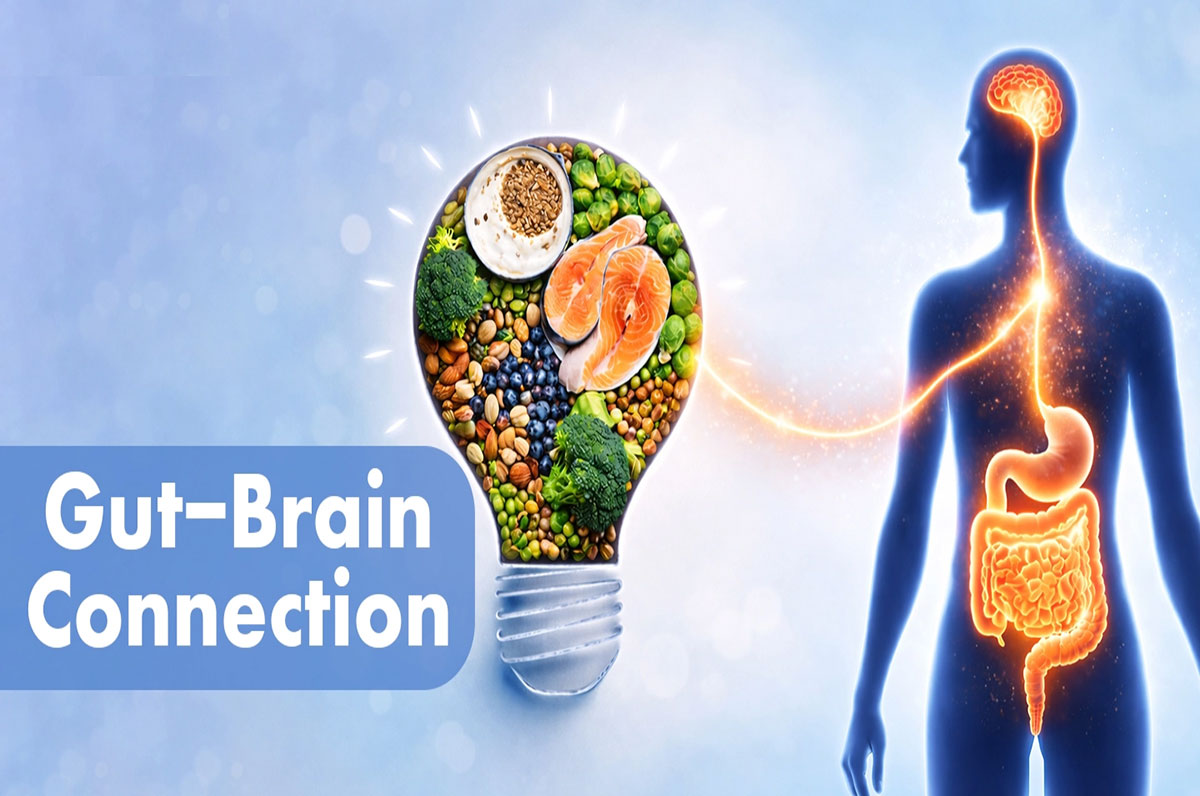
The Gut-Brain Connection: Can Your Gut Influence Your Mood?
Your gut and brain are in constant conversation. Discover what the science reveals about the gut microbiome, depression and the everyday food choices that could help support your mental wellbeing.
We’ve all felt butterflies before a big meeting, a knot in our stomach during a stressful moment, or a loss of appetite when life gets overwhelming.
But what if the relationship between your gut and your emotions goes much deeper?
Scientists are increasingly exploring how the food we eat influences the gut microbiome — and how this complex community of microorganisms communicates with the brain. It’s an exciting area of research known as nutritional psychiatry, and it could change how we think about mental health.
One clinical study has already delivered a striking finding: improving your diet may help reduce symptoms of depression.
Here’s what we know, what we’re still discovering, and how you can put the science into practice.
1. Your gut and brain are more connected than you think
The gut-brain axis is a two-way communication network linking the digestive system and the brain. It involves the vagus nerve, immune signalling, hormones and chemical messengers produced by the body and its gut microbes.
At the centre of this relationship is the gut microbiome: the vast community of bacteria and other microorganisms living in your digestive tract.
These microbes do far more than help digest food. They help break down dietary fibre, producing substances called short-chain fatty acids that play important roles in gut health, immune function and biological signalling.
Researchers are investigating how these processes may influence stress responses, mood and brain function. Although many findings are promising, scientists are still working out exactly which mechanisms matter most in humans.
One important distinction: around 90% of the body’s serotonin is produced in the gut, but gut-produced serotonin does not simply travel into the brain. The brain has its own serotonin system, and the relationship between gut health and mood is much more complex than a single chemical.
The message is not that your gut controls your emotions. It’s that gut health may be one important piece of a much bigger picture.
2. The SMILES trial: Could changing your diet help depression?
One of the most interesting studies in nutritional psychiatry is the SMILES trial, published in BMC Medicine in 2017.
Researchers investigated whether improving diet could help adults experiencing major depression. Participants received either structured dietary support to adopt a modified Mediterranean-style diet or social support over 12 weeks.
The dietary approach emphasised vegetables, fruit, whole grains, legumes, nuts, fish and other nutritious foods, alongside reduced consumption of sweets, processed meats and fried foods.
The results attracted considerable attention.
At 12 weeks, 32.3% of participants in the dietary support group had achieved remission, compared with 8% in the social support group.
This was an encouraging result, suggesting that dietary improvement could play a meaningful role in supporting people with depression.
However, there is an important caveat: the trial was relatively small, with 67 participants enrolled, and the intervention involved structured support rather than simply handing people a healthy-eating checklist.
The findings are promising, but they don’t prove that diet alone will treat depression in everyone, or that changes to gut bacteria were responsible for the improvement.
3. Four ways to eat with your mental wellbeing in mind
You don’t need an expensive supplement, a restrictive diet or a complete lifestyle overhaul to start making positive changes.
A sensible starting point is to focus on a varied, balanced eating pattern similar to the Mediterranean-style diet studied in nutritional psychiatry research.
Eat a wider variety of plants
Vegetables, fruit, beans, lentils, nuts, seeds and whole grains provide fibre and other nutrients that support gut health.
Different plant foods provide different types of fibre, so variety matters. Try adding beans to a soup, berries to breakfast or an extra vegetable to your evening meal.
Choose healthy fats
Extra virgin olive oil, nuts, seeds and oily fish such as salmon or sardines can all form part of a balanced diet.
These foods supply unsaturated fats and other nutrients important for overall health. You don’t need to eliminate particular oils to benefit; focus on the overall quality of your eating pattern.
Include fermented foods if you enjoy them
Natural yoghurt, kefir, sauerkraut and kimchi can add variety to your diet. Some contain live microorganisms, although not every fermented food is a probiotic with proven health benefits.
Research into probiotics and mental health is developing, and the evidence is not yet strong enough to recommend a particular fermented food or supplement as a treatment for depression.
Make ultra-processed foods less of a staple
Biscuits, sweets, sugary drinks and many packaged convenience foods can be part of modern life. The aim isn’t to label foods as good or bad, or to feel guilty about what you eat.
Instead, look for opportunities to make minimally processed, nutrient-rich foods a more regular part of your routine.
Small, sustainable changes are generally more useful than an all-or-nothing approach.
4. Is the gut microbiome the missing piece in mental health?
It’s tempting to imagine that improving your gut bacteria will automatically improve your mood. The reality is more nuanced.
Research has found associations between diet, the gut microbiome and mental health, and scientists are exploring whether microbial activity may influence inflammation, stress responses and brain signalling.
But an association doesn’t necessarily mean one thing causes another. Depression itself can affect appetite, food choices, sleep and daily routines, making it difficult to untangle cause and effect.
Researchers are still investigating which dietary patterns, microbial changes and biological pathways matter most, and for whom.
That uncertainty doesn’t make the research unimportant. It highlights why nutritional psychiatry is such an interesting field: it brings nutrition, neuroscience, psychology and gut biology together to explore new ways of supporting mental wellbeing.
5. Start with your next meal
You don’t need to transform your diet overnight.
Try adding one extra portion of vegetables, choosing wholegrain bread, including beans in a meal or keeping a handful of nuts available for a snack.
Think about patterns rather than perfection. The goal is to build habits you can maintain, not to create another source of pressure.
And remember: food is one part of mental health, alongside sleep, movement, social connection, psychological support and, when appropriate, medication.
If you’re experiencing persistent low mood or depression, speak to a qualified healthcare professional. Dietary changes can complement appropriate treatment, but shouldn’t replace it.
The bottom line: Nourish your body, support your mind
The gut-brain connection is one of the most fascinating developments in modern health research. We now know that the digestive system and brain communicate in complex ways, and early clinical evidence suggests that improving diet may help some people experiencing depression.
We don’t yet have every answer. But we do have a practical starting point: eat a varied, balanced diet rich in plant foods, choose nourishing fats and build habits that support your overall health.
Your next meal won’t solve every mental health challenge. But it can be one small, positive step towards looking after your whole self.
Further reading: Explore the original research
Want to explore the evidence for yourself? These peer-reviewed studies are useful starting points for readers, healthcare professionals and anyone interested in the science of nutritional psychiatry.
The SMILES trial: Jacka et al. (2017), A randomised controlled trial of dietary improvement for adults with major depression. Read the full study in BMC Medicine.
Gut microbiome and brain health: Schneider et al. (2024), Feeding gut microbes to nourish the brain: unravelling the diet–microbiota–gut–brain axis. Read the review in Nature Metabolism.
Nutrition and mental health: Merlo et al. (2024), Gut microbiota, nutrition, and mental health. Read the review in Frontiers in Nutrition.
This article is for educational purposes and is not a substitute for personalised medical or nutritional advice.